TL;DR: Corrective jaw surgery, also known as Orthognathic Surgery, realigns the upper jaw, lower jaw, or both to correct structural problems that braces alone can’t fix. It treats conditions like overbites, underbites, open bites, and facial asymmetry that affect your ability to chew, breathe, speak, and sleep properly. The procedure is performed by an oral and maxillofacial surgeon and can be life-changing for patients who’ve lived with chronic jaw dysfunction.
- Treats structural jaw misalignments that orthodontics can’t fully correct
- Addresses overbites, underbites, open bites, and facial asymmetry
- Improves chewing, breathing, speech, and sleep quality
- Performed under General Anesthesia as an inpatient or outpatient procedure
- Often coordinated with orthodontic treatment for the best results
If you’ve been dealing with chronic jaw pain, difficulty chewing, breathing issues, or a bite that just doesn’t line up no matter what you’ve tried, the problem may be structural. Braces and aligners can move teeth, but they can’t reposition the jawbone itself. That’s where Corrective Jaw Surgery comes in. It’s a procedure that addresses the underlying skeletal issue rather than just compensating for it, and for many patients, it’s the only path to lasting relief.
What is corrective jaw surgery?
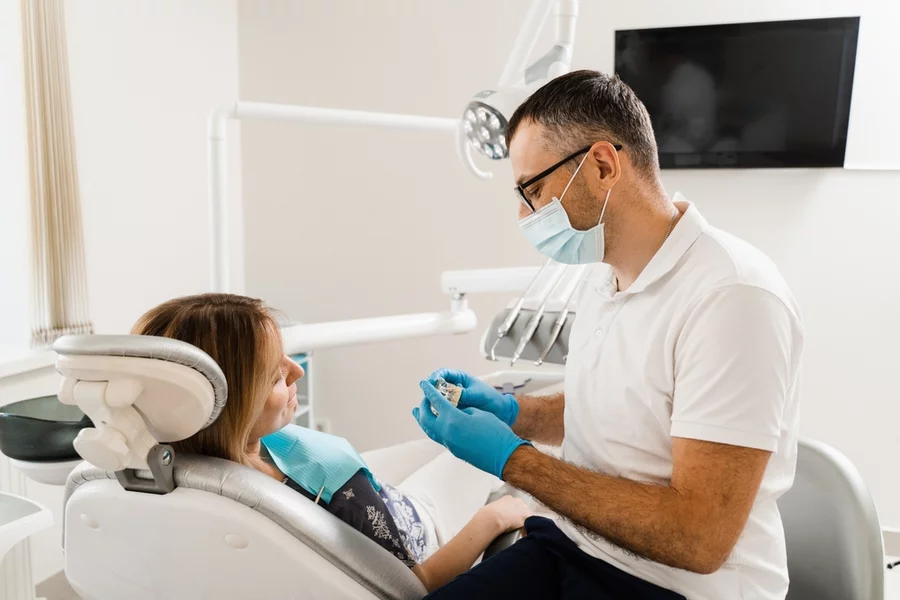
So, what is corrective jaw surgery exactly? It’s a surgical procedure that repositions the upper jaw (maxilla), lower jaw (mandible), or both to correct misalignments that affect function and facial balance. The clinical term is Orthognathic Surgery, and it’s performed by an oral and maxillofacial surgeon, often in coordination with an orthodontist who prepares the teeth for their new position before and after surgery.
During the procedure, the surgeon makes precise cuts in the jawbone, repositions it to the planned alignment, and secures it in place with titanium plates and screws. These fixation devices are small, biocompatible, and typically remain in place permanently without causing any issues. The surgery is performed under General Anesthesia, and most patients spend one night in the hospital for monitoring before going home.
Corrective Jaw Surgery isn’t cosmetic in the traditional sense, though it does improve facial balance and appearance. It’s a functional procedure first, designed to restore proper bite alignment, improve airway function, and eliminate the chronic problems that come with a jaw that doesn’t fit together the way it should.
Types of corrective jaw surgery
The specific procedure your surgeon recommends depends on which jaw is misaligned and how severe the discrepancy is.
Overbite corrective jaw surgery
An overbite occurs when the upper jaw extends too far forward relative to the lower jaw, causing the upper teeth to overlap the lower teeth excessively. Overbite corrective jaw surgery typically involves repositioning the upper jaw backward, advancing the lower jaw forward, or a combination of both. This restores proper bite alignment and often improves the patient’s facial profile significantly.
Severe overbites can cause difficulty chewing, excessive wear on the front teeth, jaw pain, and speech issues. When orthodontics alone can’t close the gap between the upper and lower jaw, surgery is the most effective solution.
Underbite jaw correction surgery
An underbite is the opposite problem. The lower jaw sits too far forward, causing the lower teeth to protrude past the upper teeth. Underbite jaw correction surgery usually involves lower jaw corrective surgery to reposition the mandible backward, though in some cases the upper jaw is also moved forward to meet it. The goal is to bring both jaws into proper alignment so the teeth meet correctly.
Underbites affect chewing efficiency, speech clarity, and facial aesthetics. They can also contribute to TMJ pain and accelerated tooth wear on the back teeth. Surgical correction eliminates these issues at their source rather than masking them with orthodontic compromises.
Open bite correction
An open bite means the upper and lower teeth don’t make contact when the mouth is closed, leaving a visible gap between them. Corrective jaw surgery open bite treatment repositions one or both jaws so the teeth come together properly. This is one of the most difficult bite problems to treat with orthodontics alone, which is why surgical correction is often recommended for moderate to severe cases.
Open bites make it nearly impossible to bite through food with your front teeth and can affect speech, particularly sounds that require the tongue to contact the upper teeth. Surgery restores full function and eliminates the compensations patients develop over years of living with the condition.
Facial asymmetry correction
When one side of the jaw grows differently than the other, it creates a visible imbalance in the face and an uneven bite. Corrective Jaw Surgery can reposition the jaw to restore symmetry, improving both function and appearance. This type of surgery requires especially precise planning, often using 3D imaging and surgical simulation to map the corrections before the procedure.
FAQs
What can jaw surgery fix?
Corrective Jaw Surgery can fix overbites, underbites, open bites, facial asymmetry, jaw pain related to misalignment, obstructive sleep apnea caused by jaw positioning, difficulty chewing or biting, speech problems linked to jaw structure, and chronic TMJ dysfunction that hasn’t responded to conservative treatment.
What jaw problems require surgery?
Surgery is typically recommended when the jaw misalignment is skeletal rather than dental, meaning braces alone can’t correct the problem. Severe overbites, underbites, open bites, significant facial asymmetry, and airway obstruction caused by jaw positioning are the most common conditions that require surgical intervention. Your oral surgeon and orthodontist will evaluate your specific case to determine whether surgery is necessary.
How painful is corrective jaw surgery?
The surgery itself is performed under General Anesthesia, so you won’t feel anything during the procedure. Post-operative discomfort varies by patient but is typically managed with prescription pain medication for the first week and over-the-counter medication after that. Swelling is usually the most uncomfortable part of recovery and peaks around days two to three before gradually subsiding. Most patients describe the recovery as manageable rather than severely painful.
Can I correct my jaw without surgery?
It depends on the severity of the misalignment. Mild cases may be improved with orthodontic treatment alone, and some patients find relief through physical therapy, splints, or other conservative approaches. If the problem is skeletal, meaning the jawbone itself is positioned incorrectly, orthodontics can only compensate so much. In these cases, surgery is the only way to achieve a complete, lasting correction. Your oral surgeon can evaluate your situation and let you know whether non-surgical options are realistic for your specific case.
Final thoughts
Living with a jaw that doesn’t align properly affects more than just your smile. It impacts how you eat, breathe, speak, and sleep. Corrective Jaw Surgery addresses the structural root of these problems and delivers results that braces and conservative treatments simply can’t achieve on their own. If you’ve been told your bite is “off” or you’ve been managing jaw pain and dysfunction for years, it may be time to explore whether surgery is the right path forward.